Inside the Brain of Transformation
Two Examples Among Many
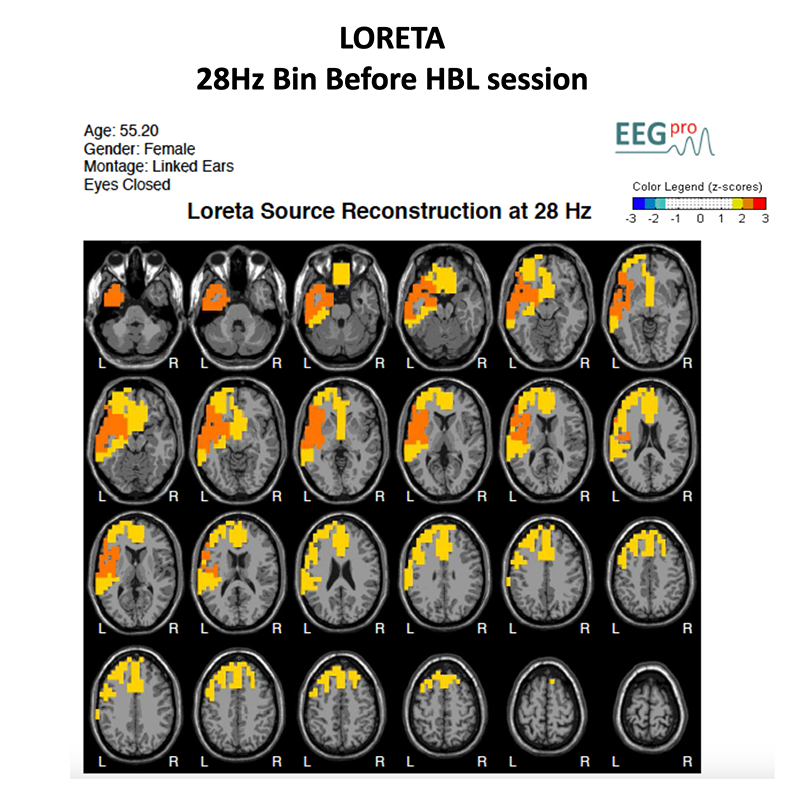
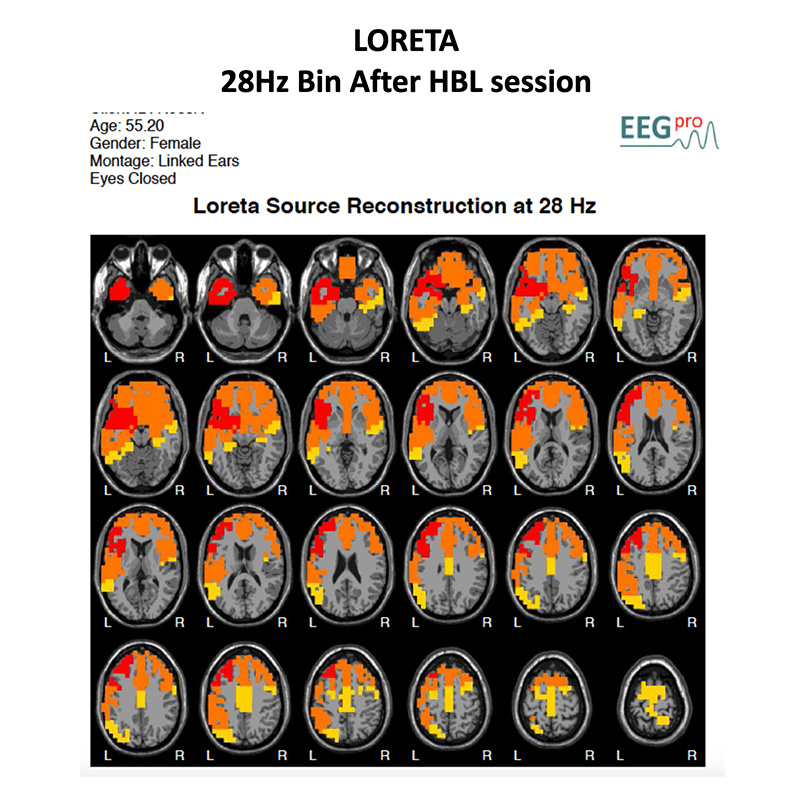
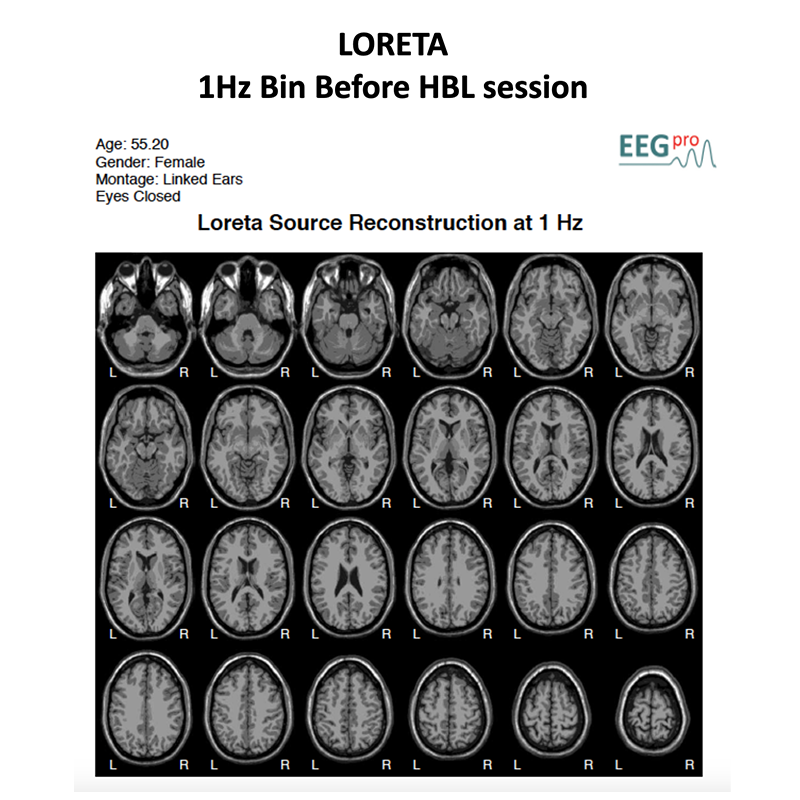
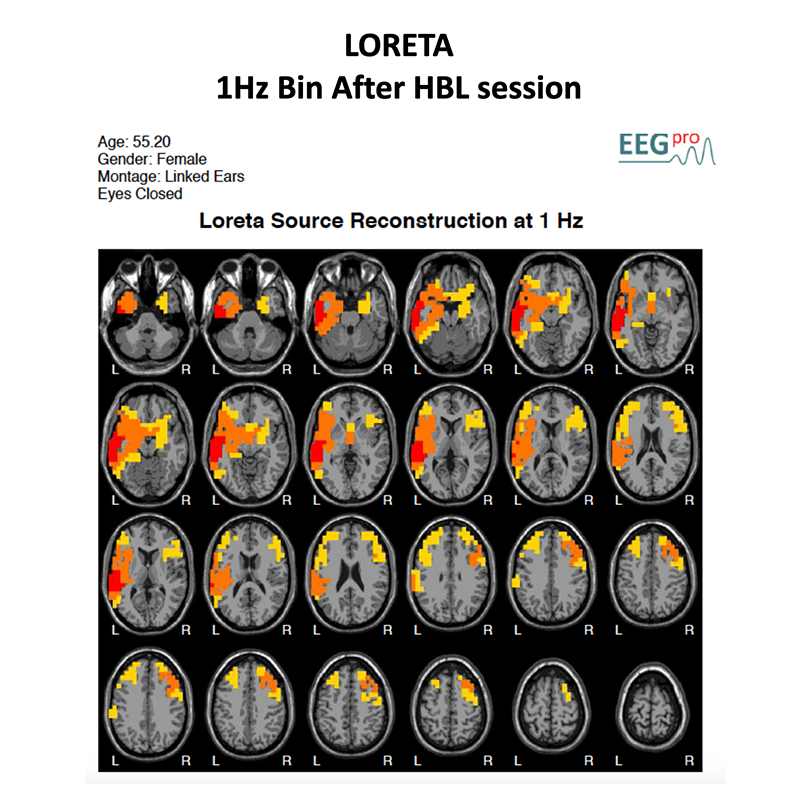
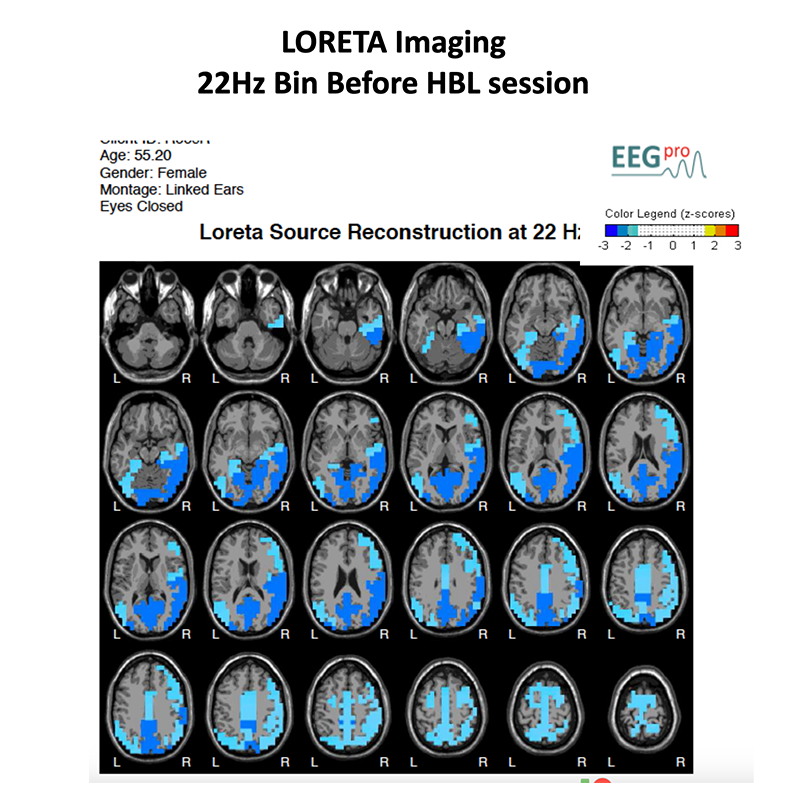
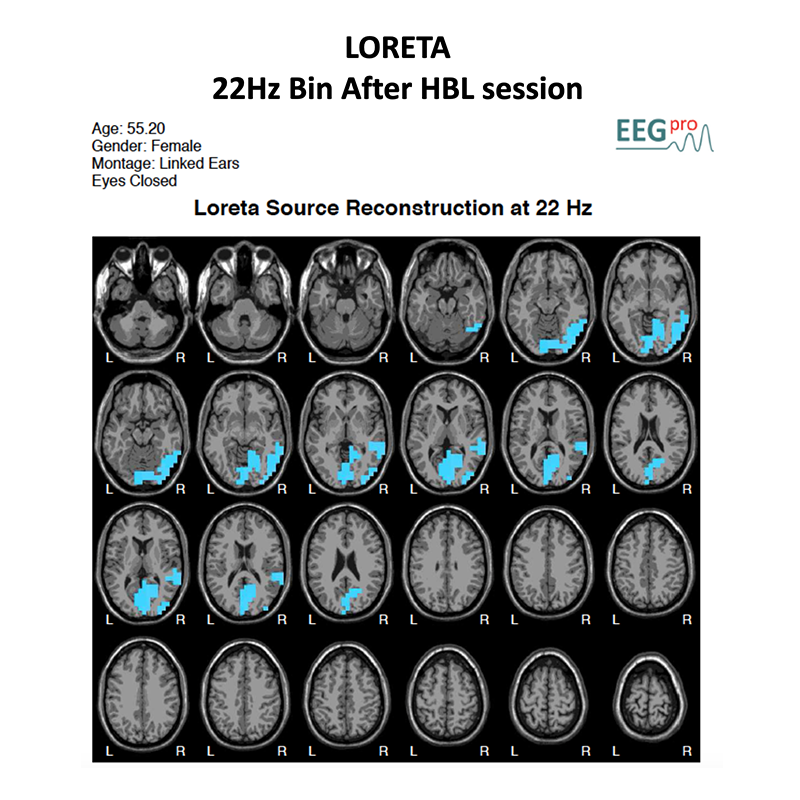
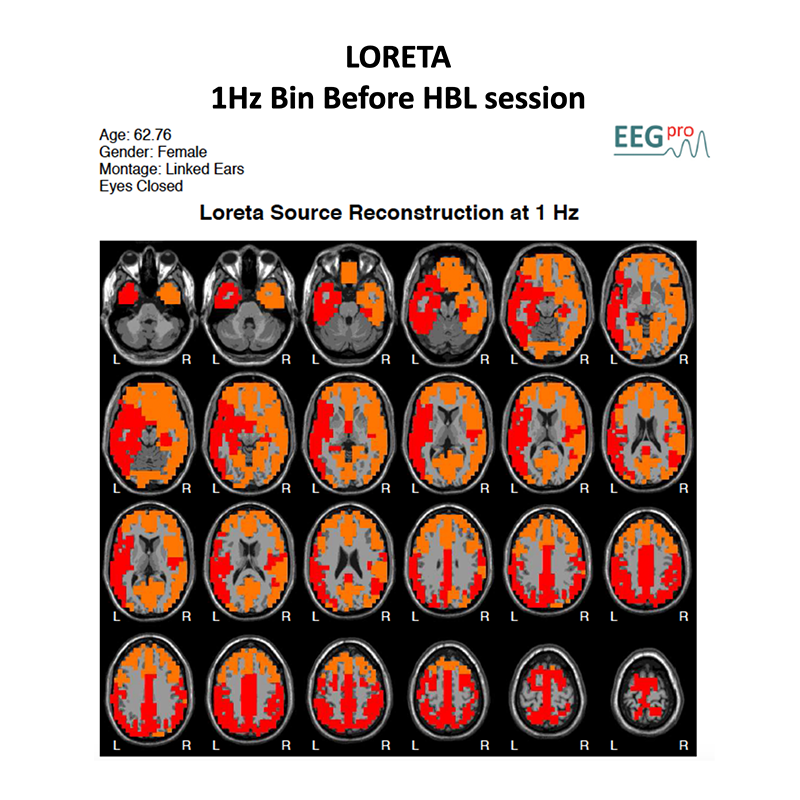
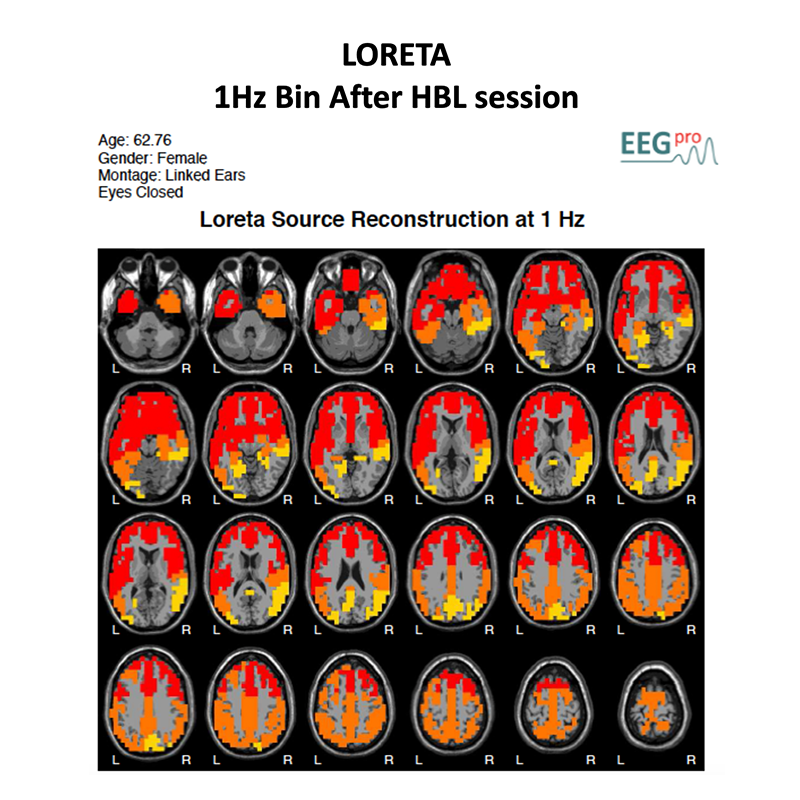
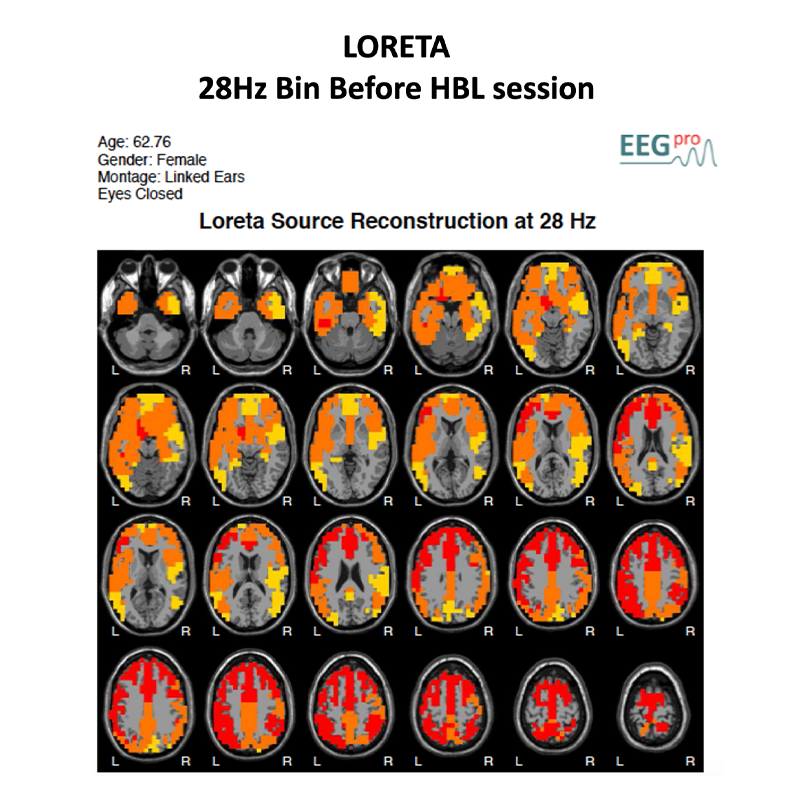
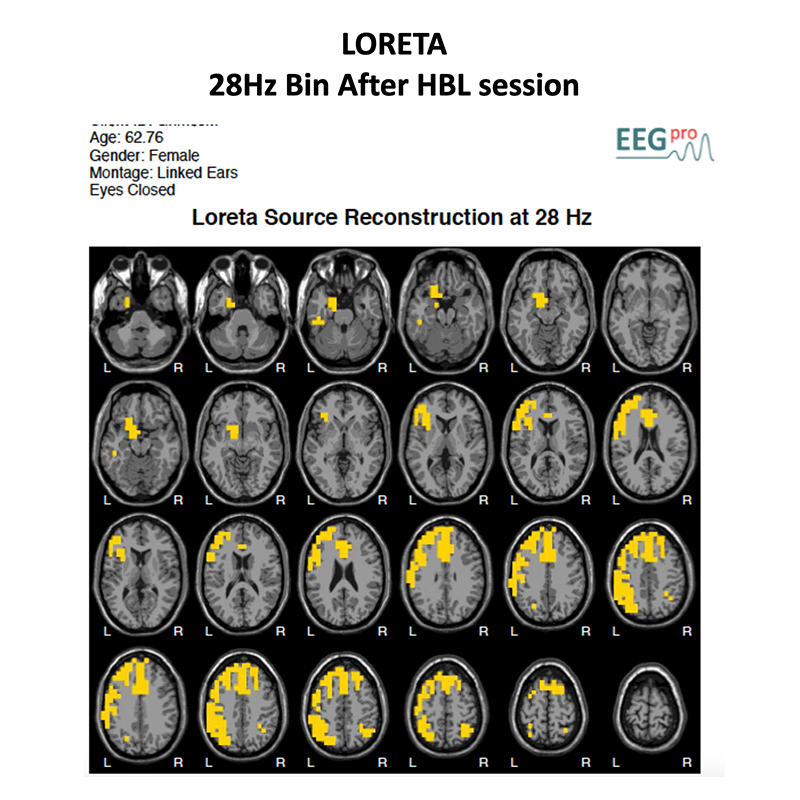
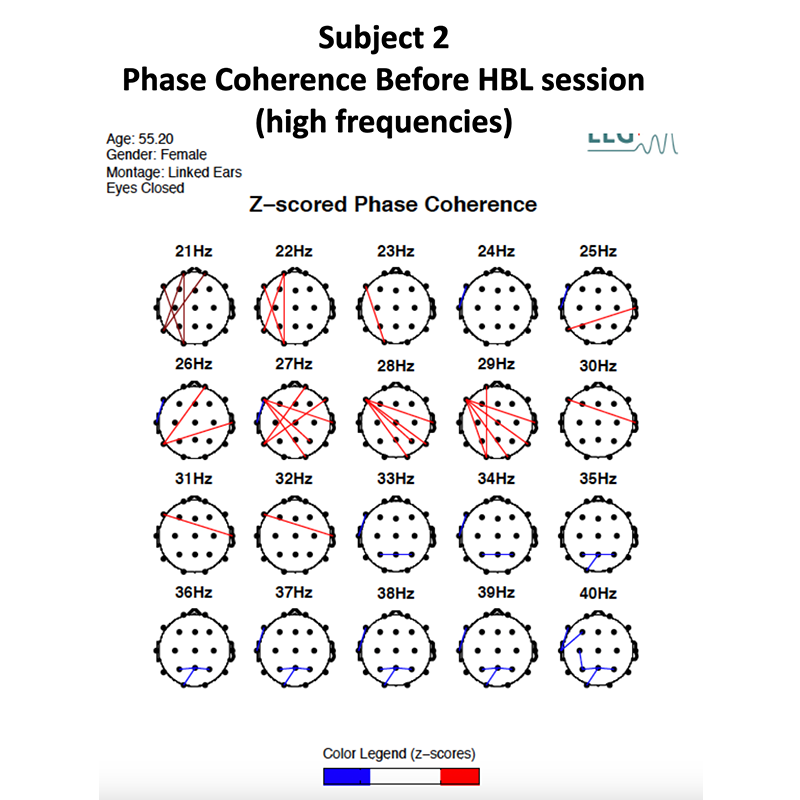
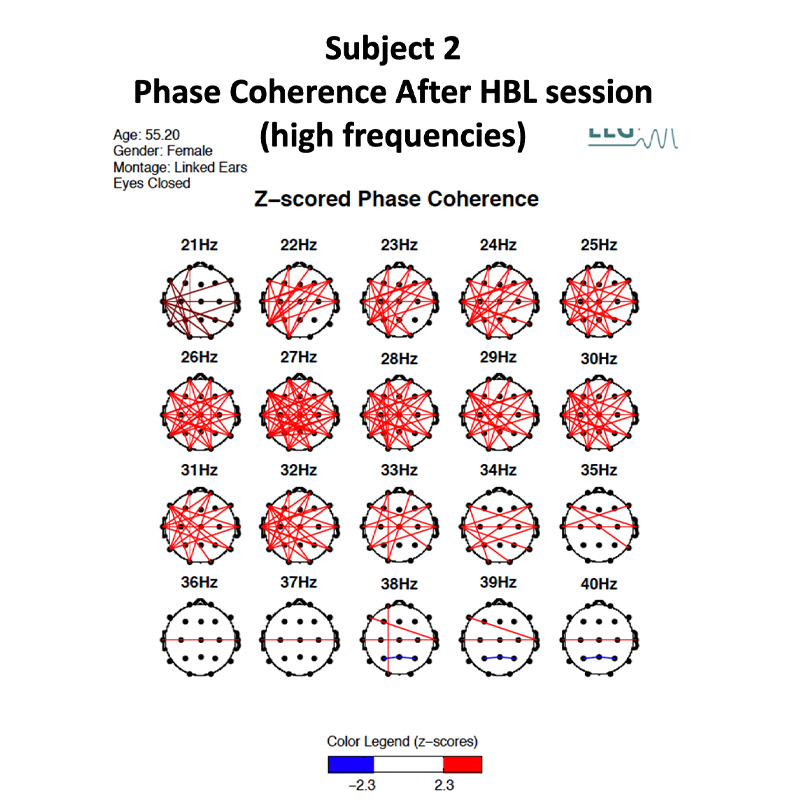
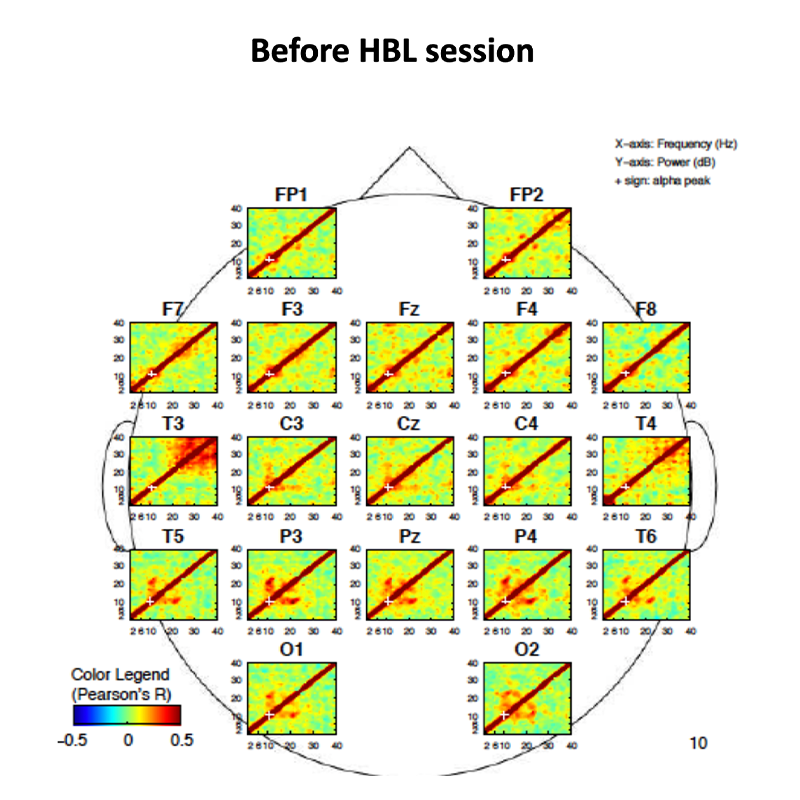
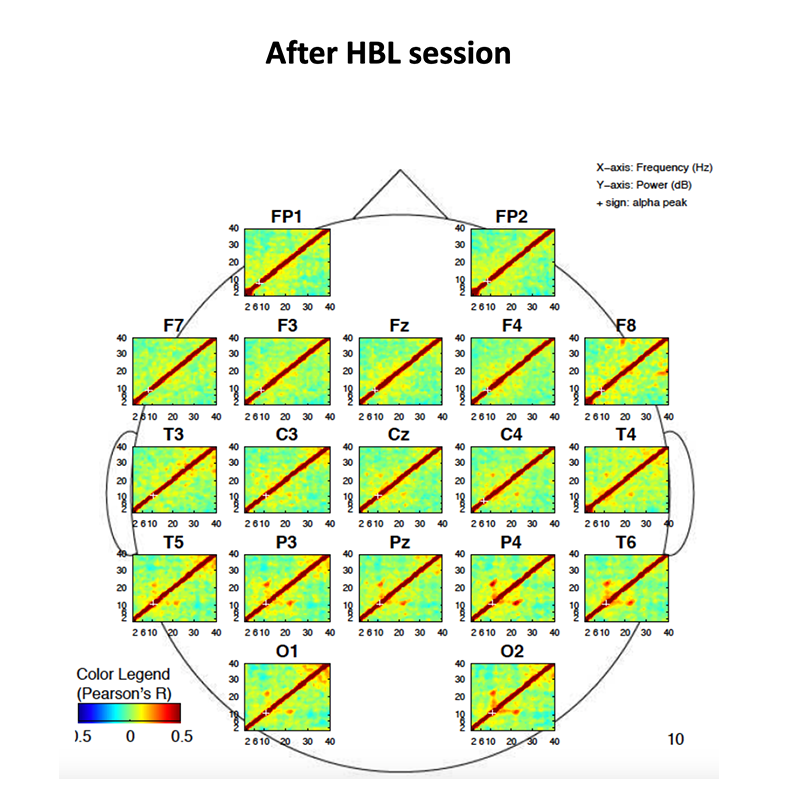
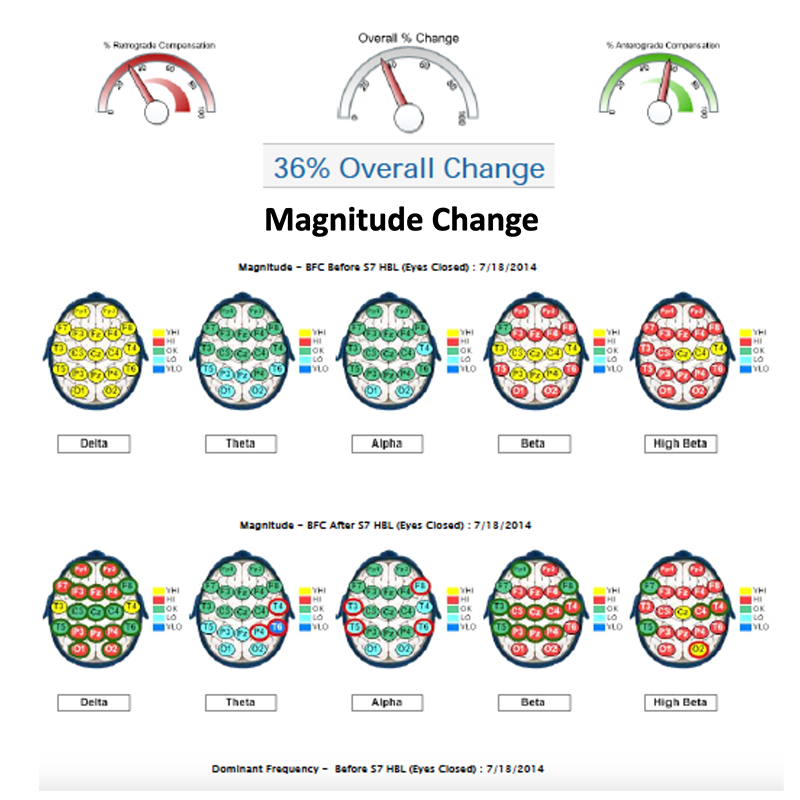
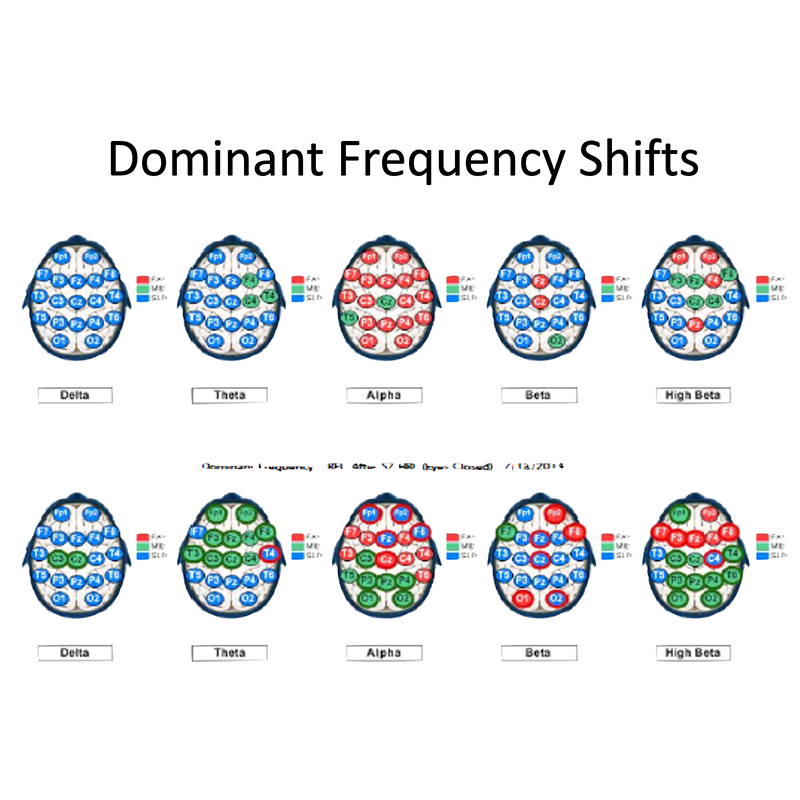
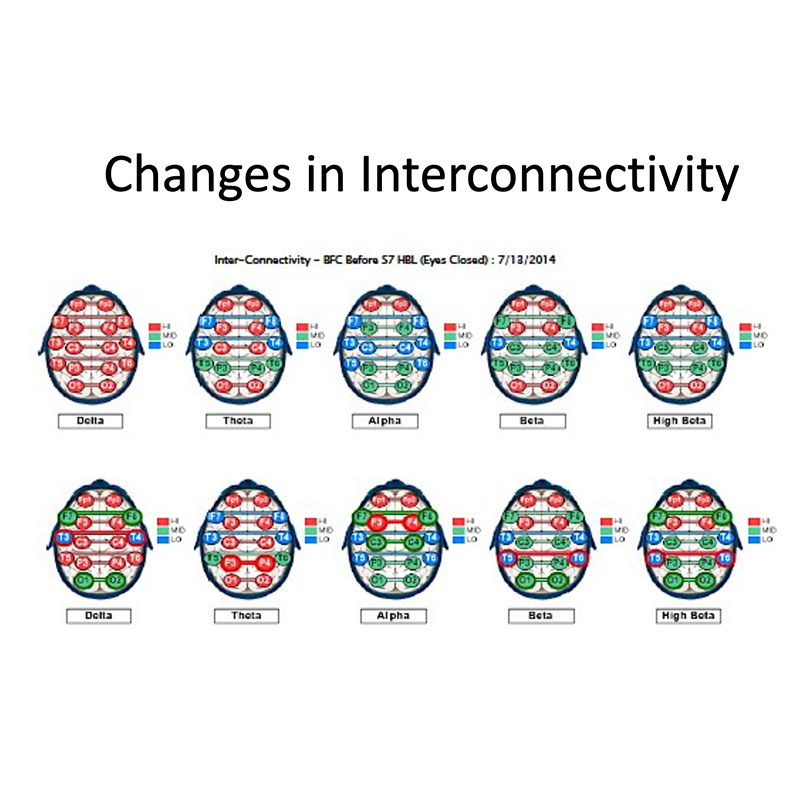
EEG recordings taken before and after Higher Brain Living® sessions have documented measurable changes in brain electrical activity.
In the examples shown here, quantitative EEG and LORETA analyses reveal changes across multiple frequency bands, including changes in the magnitude and distribution of electrical activity, estimated cortical source activity, and patterns of phase coherence between EEG recording sites.
These findings provide intriguing physiological evidence that an HBL session can be accompanied by a significant change in brain electrical organization.
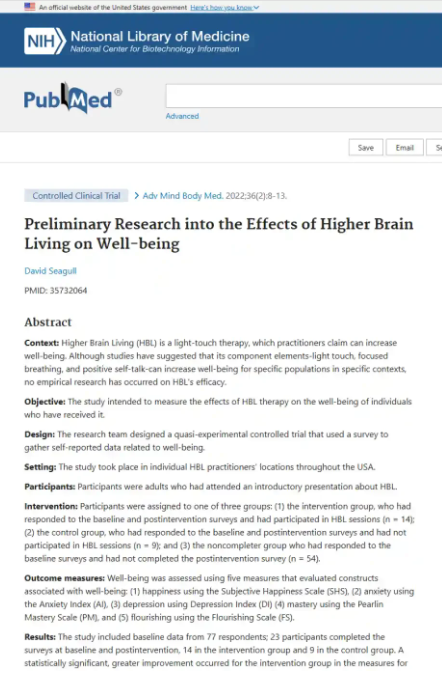
Preliminary Research into the Effects of Higher Brain Living® on Well-being
Seagull, D. Advances in Mind-Body Medicine, 2022. PMID: 35732064
This was the first published, peer-reviewed study looking at Higher Brain Living®. Participants were adults who came to an introductory HBL presentation. Some went on to have HBL sessions, and some didn’t. Everyone filled out surveys before and after, measuring things like happiness, anxiety, depression, sense of mastery over one’s life, and flourishing.
The people who had HBL sessions showed significantly greater improvement in several areas than the people who didn’t.
Significant elevation in feelings of joy and happiness
Enhanced sense of existential purpose and fulfillment
Mastery over life’s adversities and challenges
Notable increase in capacity to flourish and thrive
It’s a small, early study, and the researcher describes it that way, as a first foundation for more research. But it’s a meaningful start, and it lines up with what so many people describe after their sessions.
Research Findings from other IOTA-Powered Programs
Measurable Growth in Adult Development
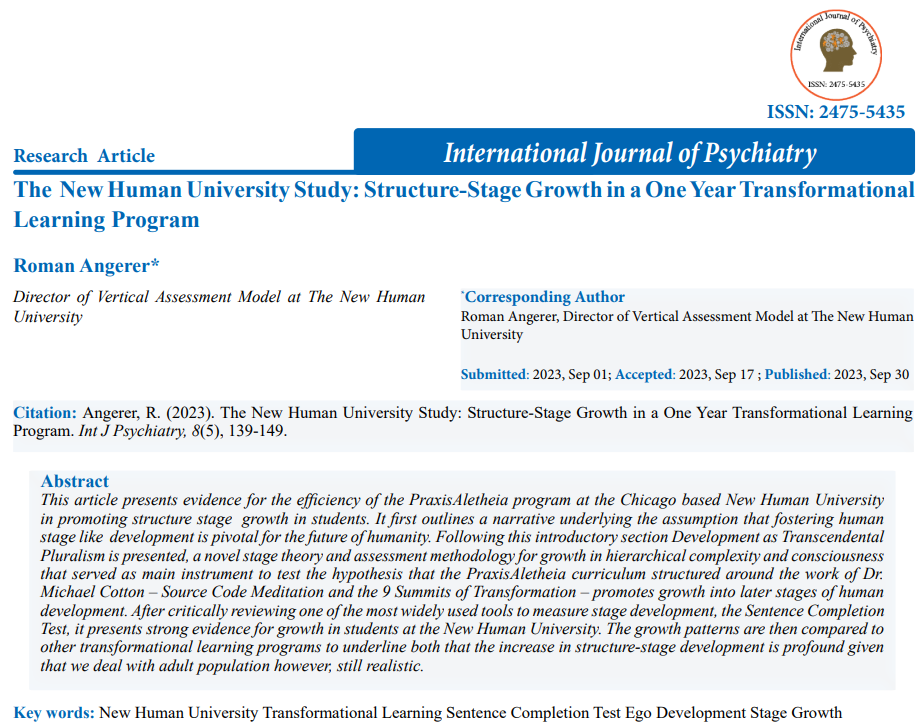
The New Human University Study: Structure-Stage Growth in a One-Year Transformational Learning Program
Roman Angerer, 2023 | International Journal of Psychiatry
Can adults experience measurable changes in how they think, understand themselves, and navigate the complexities of life?
A 2023 study published in the International Journal of Psychiatry examined this question by evaluating students participating in PraxisAletheia, a yearlong transformational learning program at The New Human University.
The study investigated vertical development, which refers to changes in the underlying structures through which individuals interpret experiences, understand themselves and others, and make meaning of the world. Unlike traditional learning, which emphasizes acquiring knowledge or skills, vertical development involves changes in the complexity and organization of consciousness.
Researchers assessed 22 participants before and after the program using a developmental framework called Development as Transcendental Pluralism (DTP). Evaluations included sentence-completion assessments and analysis of participants' written reflections and coursework. The research identified several notable outcomes:
Measurable developmental growth: Participants demonstrated statistically significant improvements in developmental assessment scores over the one-year program.
Changes in structural complexity: A detailed analysis of participants' written work identified an average advancement of approximately 1.5 quarters of a developmental stage.
Continued development in adulthood: Participants over age 50 demonstrated meaningful growth, providing evidence that developmental change remains possible well beyond early adulthood.
Comparison with other programs: The developmental changes observed compared favorably with findings from other adult learning and developmental studies, although different assessment approaches limit direct comparisons.